Showing results
in category "Oolong"
Choosing quality oolong tea is easier when you know what to look for. Learn how origin, cultivar, processing, roasting, aroma, leaf appearance, flavor and brewing affect oolong tea quality—and discover practical tips for selecting authentic Chinese oolong tea.
Read More →
Oolong tea can vary greatly in flavor, oxidation, roasting and leaf shape, so there is no single brewing method that works for every tea. Learn the most common oolong brewing mistakes and how to correct them, from using the wrong water temperature and steeping too long to choosing the right amount of tea and understanding multiple infusions.
Read More →
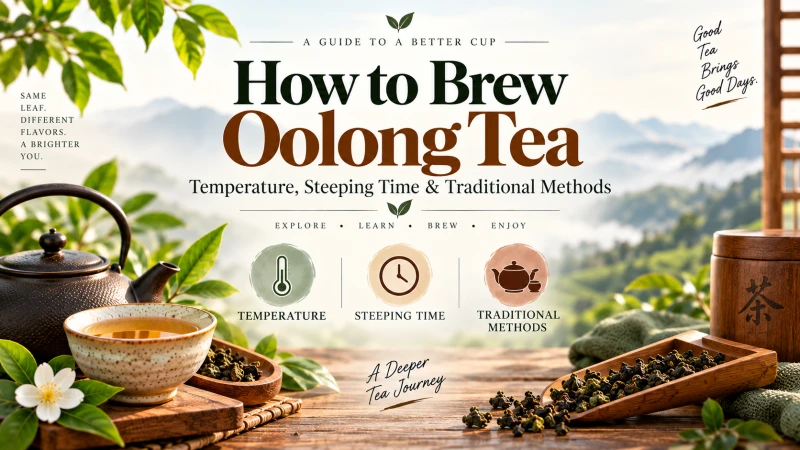
To brew oolong tea, use 185–205°F (85–96°C) water and steep approximately 2–4 minutes for a standard cup. For gongfu brewing, use more tea, less water, and short 10–30 second infusions. The ideal temperature and steeping time vary according to the oolong's style, oxidation, and roasting level.
Read More →
Oolong tea can taste floral, fruity, creamy, honeyed, roasted, nutty, mineral, or woody depending on the tea. Its flavor is influenced by the cultivar, growing environment, oxidation, roasting, processing, and brewing method. Lightly oxidized oolongs often have fresh floral and fruity flavors, while darker or roasted oolongs can develop deeper notes of nuts, toast, caramel, dried fruit, and wood.
Read More →
How is oolong tea produced?
Oolong tea is produced by harvesting the leaves of the Camellia sinensis plant, withering them to reduce moisture, and gently bruising or agitating them to encourage controlled oxidation. Once the desired oxidation level is reached, the leaves are heated to stop enzymatic activity, then rolled or shaped and dried. Some oolongs undergo additional roasting to develop their aroma and flavor. The exact process varies by region, cultivar, and tea-making tradition.
Read More →
What is oolong tea? Oolong tea is a traditional tea made from the leaves of the Camellia sinensis plant and processed through controlled partial oxidation. It falls broadly between green and black tea in oxidation, but oolong includes a much wider range of styles than this simple comparison suggests. Depending on its origin, cultivar, oxidation, shaping, drying, and roasting, oolong can have floral, fruity, creamy, mineral, toasted, nutty, woody, or roasted characteristics. Major oolong traditions include Tieguanyin, Wuyi rock tea, Phoenix Dancong, and Taiwanese oolong.
Read More →