Showing results
in category "Sheng Pu-erh"
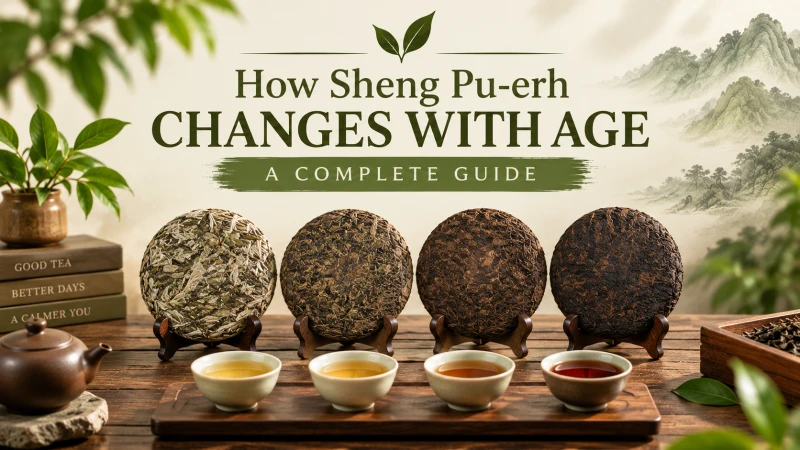
Sheng Pu-erh changes with age through gradual chemical, microbial, and sensory transformations that occur during storage. Young Sheng typically has brighter aromas, noticeable bitterness and astringency, and a fresher character. With suitable aging and storage, these qualities can become more integrated while deeper aromas, softer texture, sweetness, and woody or herbal flavors may develop. The rate and direction of aging depend on the tea's original material, processing, temperature, humidity, airflow, packaging, and storage history, so older Sheng Pu-erh is not automatically better than younger tea.
Read More →
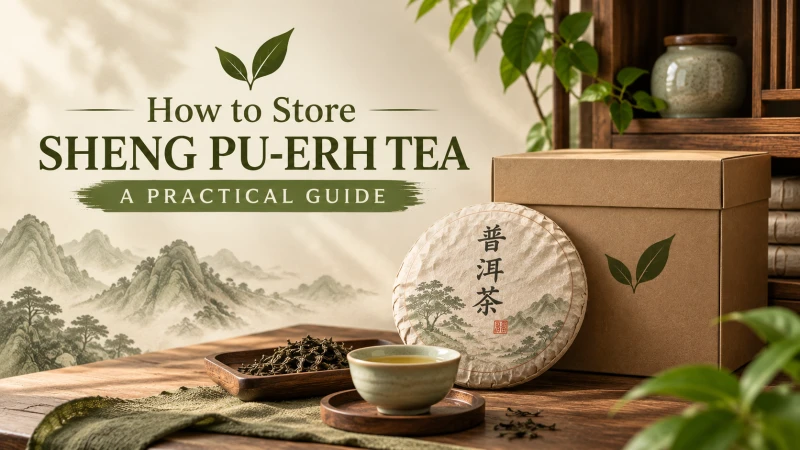
Sheng Pu-erh should be stored in a clean, dark, odor-free environment with moderate humidity and a stable temperature. Keep the tea in its original paper wrapper when possible and place it in a clean cardboard box or suitable cabinet away from sunlight, heat, excessive moisture, and strong odors. For long-term aging, avoid extreme humidity and temperature fluctuations. A stable environment is generally more important than trying to create artificially warm or humid conditions.
Read More →
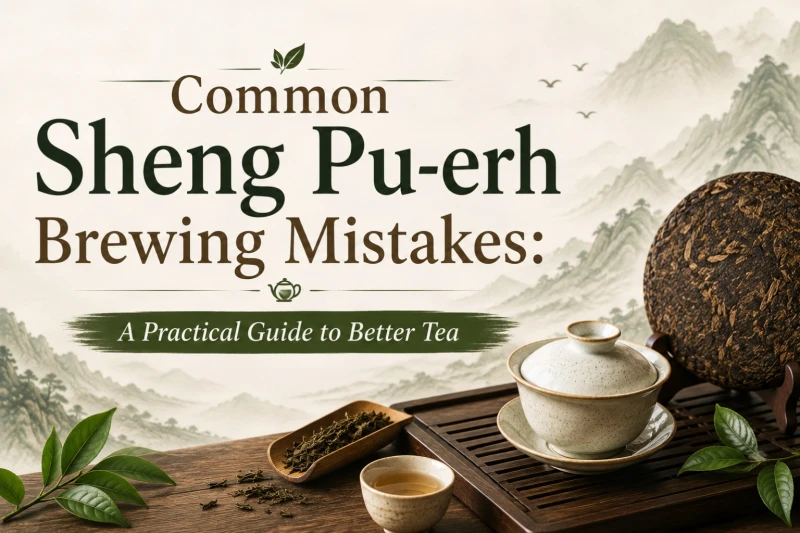
The most common Sheng Pu-erh brewing mistakes include using water that is too hot, steeping the leaves for too long, using too much tea, aggressively breaking compressed leaves, skipping an appropriate rinse, using poor-quality water, and following brewing instructions too rigidly. To brew Sheng Pu-erh more successfully, begin with clean water, a moderate amount of tea, a suitable temperature, and short infusions. Taste each infusion and adjust the temperature, steeping time, or amount of tea gradually according to the tea's character.
Read More →
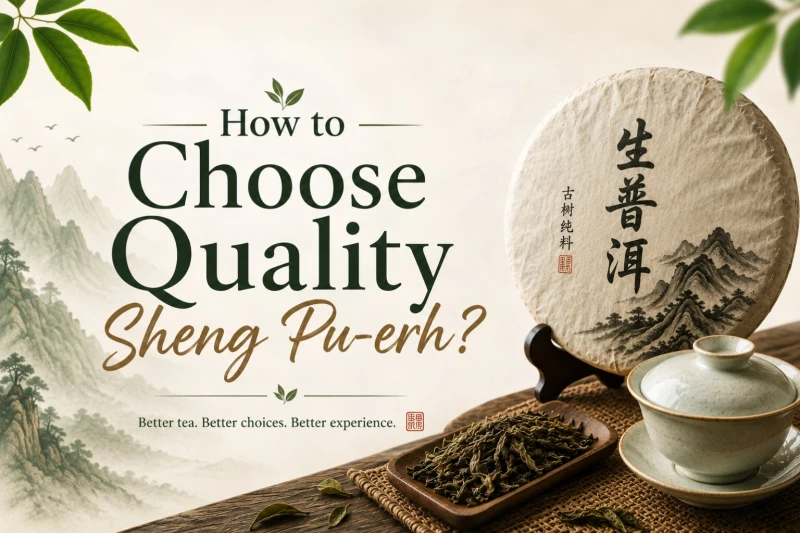
To choose quality Sheng Pu-erh, consider several factors together rather than relying on age or price alone. Look for reliable information about the tea's origin, leaf material, harvest, production, and storage. Examine the dry leaves for cleanliness and consistency, then smell and taste the tea across several infusions. Quality Sheng Pu-erh often shows clear aroma, balanced bitterness or astringency, pleasant mouthfeel, lingering aftertaste, and changing flavors as it is brewed. For aged Sheng Pu-erh, storage history is particularly important because poor storage can negatively affect the tea's character.
Read More →
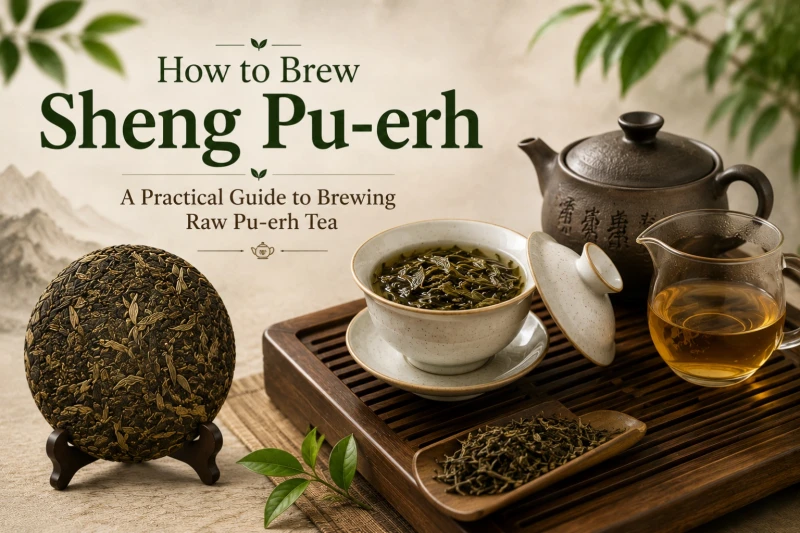
How do you brew Sheng Pu-erh? To brew Sheng Pu-erh Gongfu style, use approximately 5–7 grams of tea per 100 ml of water. Start with water around 90–95°C (194–203°F) for young Sheng, rinse the leaves briefly, then begin with short infusions of about 8–15 seconds. Gradually increase the steeping time as the leaves open and the flavor becomes lighter. Adjust the temperature, tea quantity, and infusion time according to the tea's bitterness, astringency, aroma, sweetness, and mouthfeel.
Read More →
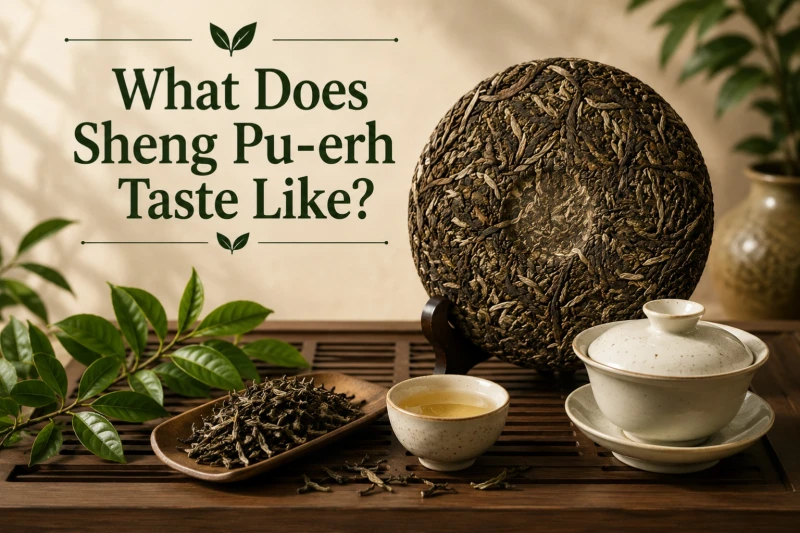
What does Sheng Pu-erh taste like? Sheng Pu-erh, or raw Pu-erh tea, can taste fresh, floral, herbal, fruity, bitter, or astringent when young, while older Sheng Pu-erh often develops smoother, sweeter, woody, earthy, and more mellow characteristics. Its flavor depends on factors including tea origin, cultivar, processing, age, storage conditions, and brewing method. Unlike Shu Pu-erh, Sheng Pu-erh is not artificially pile-fermented and can continue changing naturally during storage.
Read More →
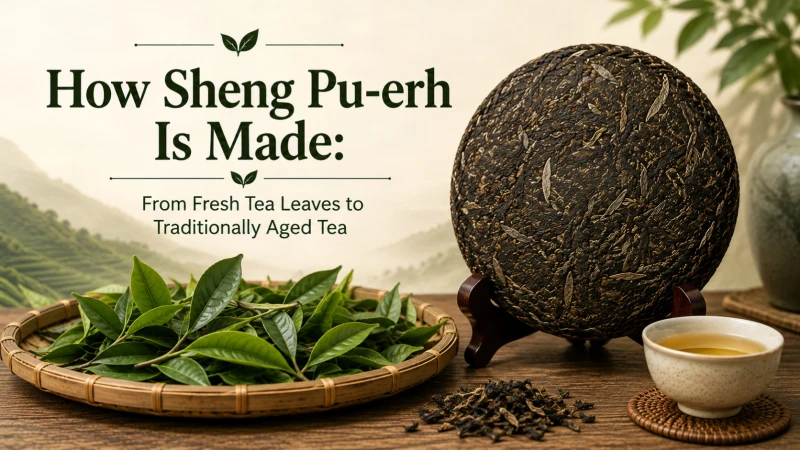
Sheng Pu-erh is traditionally made from fresh tea leaves grown in Yunnan, China. The leaves are harvested, withered, heated through a process called sha qing to reduce enzymatic oxidation, rolled, and sun-dried to produce maocha. The loose tea may then be sorted, blended, and compressed into cakes or other shapes. Unlike Shu Pu-erh, Sheng Pu-erh is not subjected to accelerated wet-pile fermentation. Instead, it can gradually transform during suitable storage as the tea ages.
Read More →
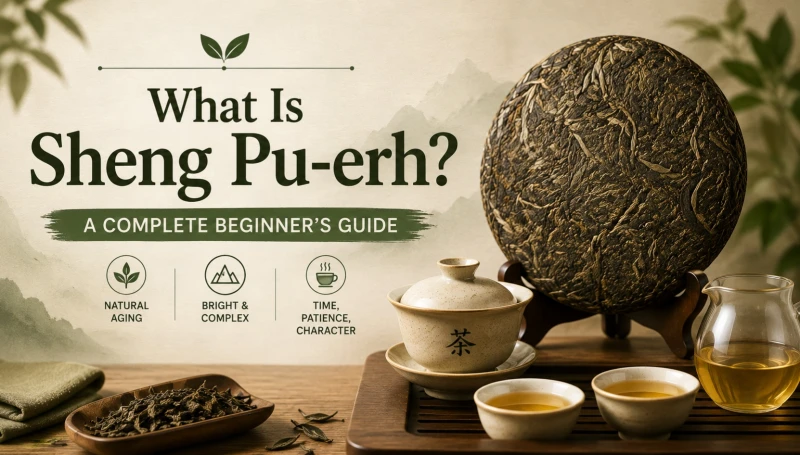
Sheng Pu-erh, also known as raw Pu-erh, is a traditional Chinese tea known for its distinctive character and ability to evolve with age. This beginner-friendly guide explains how Sheng Pu-erh is made, how it differs from Shu Pu-erh, how aging and storage affect its flavor, and how to brew and choose quality tea.
Read More →